Introduction to Red-Eared Slider Care
Red-eared sliders (Trachemys scripta elegans) are among the most popular pet turtles in the world, and for good reason. These hardy, personable aquatic turtles can live 20-40 years with proper care, making them a long-term commitment that rewards dedicated owners with years of enjoyment. However, their longevity depends heavily on providing the right habitat from the start.
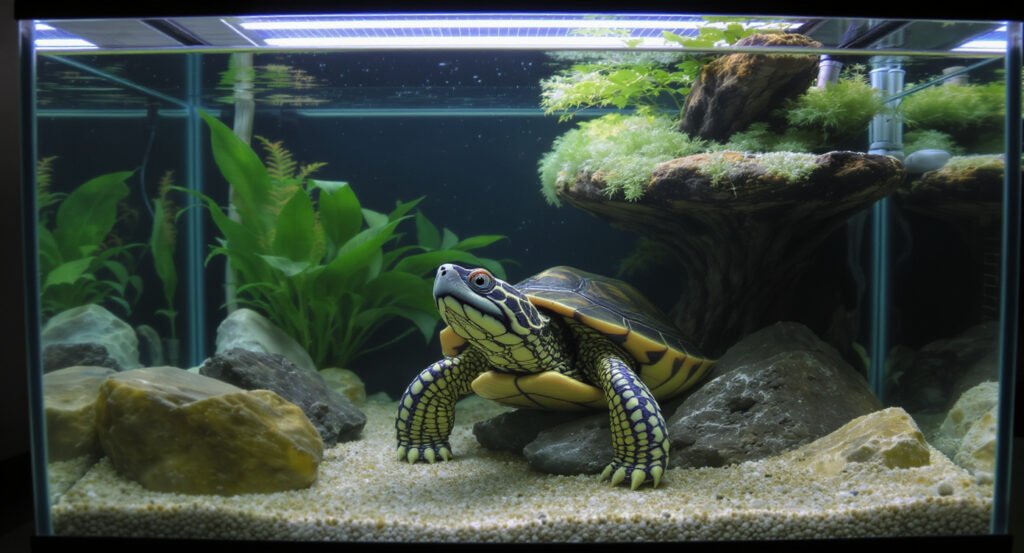
Setting up a proper red-eared slider environment requires understanding their semi-aquatic nature. These turtles need both adequate water for swimming and feeding, plus dry land for basking and thermoregulation. Getting this balance right is crucial for their physical and psychological well-being.
Tank Size Requirements
One of the most common mistakes new red-eared slider owners make is starting with too small a tank. These turtles grow considerably, with females reaching 10-12 inches and males 5-9 inches at maturity.
Tank Size Guidelines
- Hatchlings (under 4 inches): Minimum 40-gallon tank
- Juveniles (4-6 inches): 55-75 gallon tank recommended
- Adults (6+ inches): 75-125 gallons or larger
- Rule of thumb: 10 gallons per inch of shell length
Larger is always better when it comes to turtle tanks. More water volume helps maintain water quality and gives your turtle adequate swimming space for exercise and enrichment.
Worried About Your Reptile's Health?
Upload a photo and get instant AI health analysis. Catch problems before they become expensive vet bills.
Get Free Health Check →Water Setup and Filtration
Water quality is perhaps the single most important factor in red-eared slider health. These turtles are messy feeders and produce significant waste, making powerful filtration essential.
Water Depth
Provide water deep enough for your turtle to swim freely and turn around comfortably. A good rule is water depth equal to at least 1.5 times the length of your turtle’s shell. This allows them to right themselves if they flip over, which can be life-threatening if they cannot self-correct.
Filtration Requirements
Choose a filter rated for 2-3 times your tank’s actual water volume. Red-eared sliders require significantly more filtration than fish tanks of the same size due to the amount of waste they produce. Canister filters are often recommended for their superior filtration capacity and ease of maintenance.
Water Temperature
Maintain water temperature between 75-80°F (24-27°C) for adult sliders, and slightly warmer at 78-82°F (25-28°C) for hatchlings. Use a reliable aquarium heater with a guard to prevent your turtle from burning itself on the heating element.
Never Miss Early Warning Signs
AI photo analysis catches subtle health issues humans miss 80% of the time. Early detection = healthier reptile + lower vet bills.
Start Free Trial →Basking Area Setup
Red-eared sliders must be able to completely exit the water and dry off fully under a heat source. Inadequate basking opportunities lead to shell problems, respiratory infections, and other serious health issues.
Basking Platform Options
- Commercial turtle docks – Easy to install, adjustable with tank water level
- DIY platforms – Cork bark, egg crates with non-slip coating, or custom-built ramps
- Rock formations – Natural appearance but ensure stability and no sharp edges
Basking Temperature
The basking area should reach 88-95°F (31-35°C) directly under the heat lamp. Use a combination of a basking/heat lamp and a UVB bulb to provide both warmth and essential UV radiation. Position lights 10-12 inches above the basking platform for appropriate heat distribution.
Lighting: UVB is Non-Negotiable
UVB lighting is absolutely essential for red-eared sliders kept indoors. Without adequate UVB exposure, turtles cannot synthesize vitamin D3, leading to metabolic bone disease and shell deformities.
UVB Bulb Recommendations
- Use a UVB bulb rated 5.0 or 10.0 for reptiles
- Position the UVB bulb 10-12 inches from the basking area
- Provide 10-12 hours of light daily to simulate natural photoperiods
- Replace UVB bulbs every 6-12 months even if they still produce visible light
Mercury vapor bulbs can serve as both heat and UVB sources, simplifying your lighting setup while providing excellent coverage.
Join thousands of successful reptile owners
Try ReptileCoach Free →Water Quality Maintenance
Consistent water quality maintenance prevents the most common health problems in captive red-eared sliders. Establish a regular maintenance routine from day one.
Water Testing Parameters
- Ammonia: 0 ppm
- Nitrite: 0 ppm
- Nitrate: Under 40 ppm
- pH: 7.0-8.0
Test water weekly and perform 25-50% water changes weekly or more frequently if parameters rise. A well-cycled biological filter is your best defense against poor water quality.
Substrate Options
The substrate choice affects both aesthetics and ease of maintenance:
- Bare bottom – Easiest to clean, hygienic option recommended for beginners
- Large river rocks – Natural appearance, turtles cannot accidentally ingest them
- Fine sand – Natural look but more challenging to keep clean
- Avoid small gravel that turtles might accidentally ingest during feeding
Décor and Enrichment
While not strictly necessary, appropriate décor provides enrichment and reduces stress:
"This app saved my bearded dragon's life. The AI caught early MBD in photos I thought looked completely normal. Worth every penny!"
— Sarah K., ReptileCoach User
Get Your Free 7-Day Trial →- Artificial plants – Safe, easy to clean, adds visual interest
- Hiding spots – Caves or overhangs where turtles can retreat
- Aquarium-safe decorations – Provide enrichment and hiding spots
Get Personalized Setup Advice
Every red-eared slider is unique, and specific setup needs can vary based on your turtle’s age, size, and living space. Get personalized habitat advice from our AI coach to ensure your setup is optimized for your specific situation.
Maintenance Schedule
Consistent maintenance keeps your turtle healthy:
- Daily: Check temperatures, remove uneaten food
- Weekly: 25-50% water change, test water parameters
- Biweekly: Clean filter media
- Monthly: Deep clean basking area, inspect equipment
- Every 6-12 months: Replace UVB bulb
Final Thoughts
Creating the perfect red-eared slider habitat requires investment in proper equipment and commitment to ongoing maintenance. However, watching your turtle thrive in a well-designed environment makes every effort worthwhile. Start with the right setup from day one, and you’ll establish a foundation for decades of enjoyment with your aquatic companion.
Ready to Give Your Reptile the Best Care?
Stop guessing and start knowing. Get personalized AI-powered care guidance, photo health analysis, and 24/7 expert advice for YOUR specific reptile.
Get Personalized Care Guidance
AI-powered photo analysis and daily care tracking for YOUR reptile
Try Free for 7 Days →