
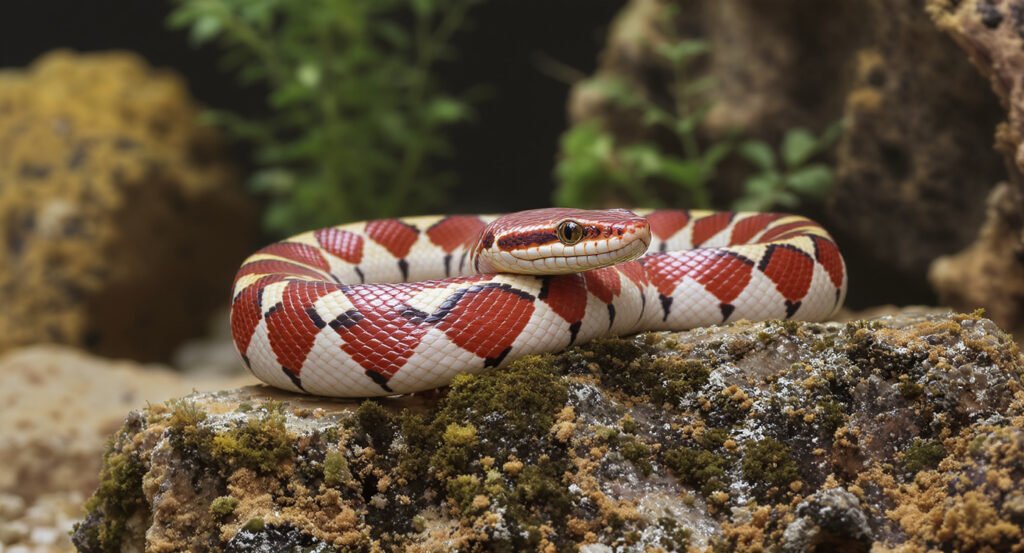
Milk snakes are among the most popular and rewarding pet snakes for both beginners and experienced keepers, offering stunning color patterns and manageable care requirements. With their docile nature and relatively small size, milk snake care is straightforward once you understand their basic needs for housing, temperature regulation, and feeding schedules. These beautiful constrictors can thrive for 15-20 years in captivity when provided with proper husbandry, making them an excellent long-term companion for reptile enthusiasts.
Species Overview and Characteristics
Milk snakes (Lampropeltis triangulum) belong to the kingsnake family and encompass over 24 subspecies across North, Central, and South America. These non-venomous constrictors are famous for their vibrant bands of red, black, and white or yellow that mimic the appearance of the venomous coral snake—a defense mechanism known as Batesian mimicry.
Adult milk snakes typically reach lengths between 2 to 4 feet, though some subspecies like the Honduran milk snake can grow up to 5 feet. Popular subspecies among keepers include:
- Honduran milk snake – largest subspecies with bold orange and red bands
- Pueblan milk snake – striking tricolor pattern, compact size around 3 feet
- Nelson’s milk snake – vibrant red bands with distinct borders
- Sinaloan milk snake – bright red, black, and white bands, smaller size
Natural Habitat and Behavior
In the wild, milk snakes inhabit diverse environments including woodlands, rocky hillsides, grasslands, and agricultural areas. They are primarily terrestrial but occasionally climb, and they’re most active during twilight hours (crepuscular) or at night (nocturnal). Understanding their natural behavior helps replicate appropriate conditions in captivity.
Worried About Your Reptile's Health?
Upload a photo and get instant AI health analysis. Catch problems before they become expensive vet bills.
Get Free Health Check →These snakes are solitary creatures that spend much of their time hiding under rocks, logs, or debris. This secretive nature means your pet will appreciate multiple hiding spots in their enclosure to feel secure.
Enclosure Setup and Requirements
A proper enclosure is the foundation of successful milk snake care. For adult milk snakes, a 20-gallon long tank (30″ x 12″ x 12″) is the minimum size, though a 40-gallon breeder tank provides more space and enrichment opportunities.
Essential Enclosure Components
- Substrate: Aspen shavings, cypress mulch, or paper-based bedding work well; avoid cedar and pine
- Hide boxes: Provide at least two hides—one on the warm side and one on the cool side
- Water bowl: Large enough for soaking, changed daily
- Climbing branches: Optional but appreciated by some individuals
- Secure lid: Milk snakes are escape artists and need a locking screen top
The enclosure should be escape-proof, as milk snakes can squeeze through surprisingly small openings. Check all corners, vents, and lid edges for gaps.
Temperature and Humidity Requirements
Proper thermal regulation is critical for digestion, immune function, and overall health. Create a thermal gradient across the enclosure:
Never Miss Early Warning Signs
AI photo analysis catches subtle health issues humans miss 80% of the time. Early detection = healthier reptile + lower vet bills.
Start Free Trial →Temperature Guidelines
- Warm side (basking spot): 85-90°F
- Cool side: 75-80°F
- Nighttime temperature: 70-75°F
Use an under-tank heating pad or heat tape connected to a thermostat to maintain consistent temperatures. Never rely on heat rocks, which can cause burns. Monitor temperatures with digital thermometers placed at both ends of the enclosure.
Humidity Levels
Maintain humidity between 40-60%. Most subspecies tolerate average household humidity well, but monitor levels with a hygrometer. Increase humidity slightly during shedding by adding a humid hide—a container with damp sphagnum moss—to help your snake shed completely.
Diet and Feeding Schedule
Milk snakes are carnivorous and feed exclusively on appropriately-sized prey in captivity. Most keepers offer frozen-thawed rodents, which are safer and more convenient than live prey.
Feeding Guidelines by Age
- Hatchlings and juveniles: Pinkie or fuzzy mice every 5-7 days
- Subadults: Hopper or small adult mice every 7-10 days
- Adults: Adult mice or small rats every 10-14 days
The prey item should be approximately the same width as the thickest part of your snake’s body. Feed in the evening when milk snakes are naturally most active. Many keepers use a separate feeding container to prevent substrate ingestion, though this isn’t strictly necessary if you’re careful.
Join thousands of successful reptile owners
Try ReptileCoach Free →Wait 48 hours after feeding before handling to allow proper digestion and prevent regurgitation.
Handling and Temperament
Milk snakes are generally docile once established, though hatchlings can be defensive and may musk or bite when first handled. With regular, gentle handling sessions of 10-15 minutes a few times per week, most milk snakes become calm and tolerant.
Handling tips for success:
- Support the snake’s body fully and avoid grabbing or restraining
- Handle in the evening when they’re naturally active
- Wash hands before handling to remove food scents
- Start with short sessions and gradually increase duration
- Never handle for 48 hours after feeding
Some individuals remain slightly more defensive than others—this is normal variation and doesn’t indicate poor care.
"This app saved my bearded dragon's life. The AI caught early MBD in photos I thought looked completely normal. Worth every penny!"
— Sarah K., ReptileCoach User
Get Your Free 7-Day Trial →Common Health Issues and Prevention
Healthy milk snakes are alert, have clear eyes (except during shed), maintain good body weight, and feed regularly. Watch for these common health concerns:
Respiratory Infections
Symptoms include wheezing, mucus around the nostrils, and open-mouth breathing. Usually caused by temperatures that are too low or poor ventilation. Maintain proper temperatures and ensure adequate airflow.
Mites
Tiny black or red parasites visible on the snake or in water bowls. Quarantine new animals and treat infestations promptly with appropriate mite treatments.
Incomplete Sheds
Often due to low humidity. Provide a humid hide and ensure proper hydration. Retained eye caps should be addressed by a veterinarian.
Worried About Your Reptile's Health?
Upload a photo and get instant AI health analysis. Catch problems before they become expensive vet bills.
Get Free Health Check →Regurgitation
Can result from handling too soon after eating, temperatures too low, or prey too large. Wait two weeks before offering food again after regurgitation, and offer a smaller meal.
Schedule annual veterinary checkups with a reptile-experienced vet to catch potential issues early.
Tips for Beginner Milk Snake Keepers
Starting with the right approach sets you up for success:
- Purchase captive-bred: Captive-bred snakes adapt better and carry fewer parasites than wild-caught specimens
- Prepare before bringing home: Have the enclosure fully set up and temperature-tested for at least 48 hours
- Allow acclimation time: Let your new snake settle for 5-7 days before the first feeding attempt
- Keep detailed records: Track feeding dates, sheds, and weight to monitor health trends
- Research your subspecies: Some subspecies have slightly different size and temperament characteristics
- Invest in quality equipment: Reliable thermostats and thermometers prevent temperature-related health issues
Conclusion: Thriving with Your Milk Snake
Milk snake care is accessible for reptile keepers of all experience levels when you understand and consistently meet their fundamental needs. By providing appropriate temperatures, a secure enclosure with hiding spots, regular feeding of properly-sized prey, and respectful handling, your milk snake will flourish in captivity. These beautiful, hardy snakes reward proper husbandry with decades of companionship and the satisfaction of successfully keeping one of nature’s most striking serpents. Whether you choose a vibrant Honduran or a compact Pueblan, your milk snake journey begins with the solid foundation of knowledge-based care.
Never Miss Early Warning Signs
AI photo analysis catches subtle health issues humans miss 80% of the time. Early detection = healthier reptile + lower vet bills.
Start Free Trial →Ready to Give Your Reptile the Best Care?
Stop guessing and start knowing. Get personalized AI-powered care guidance, photo health analysis, and 24/7 expert advice for YOUR specific reptile.
Get Personalized Care Guidance
AI-powered photo analysis and daily care tracking for YOUR reptile
Try Free for 7 Days →