
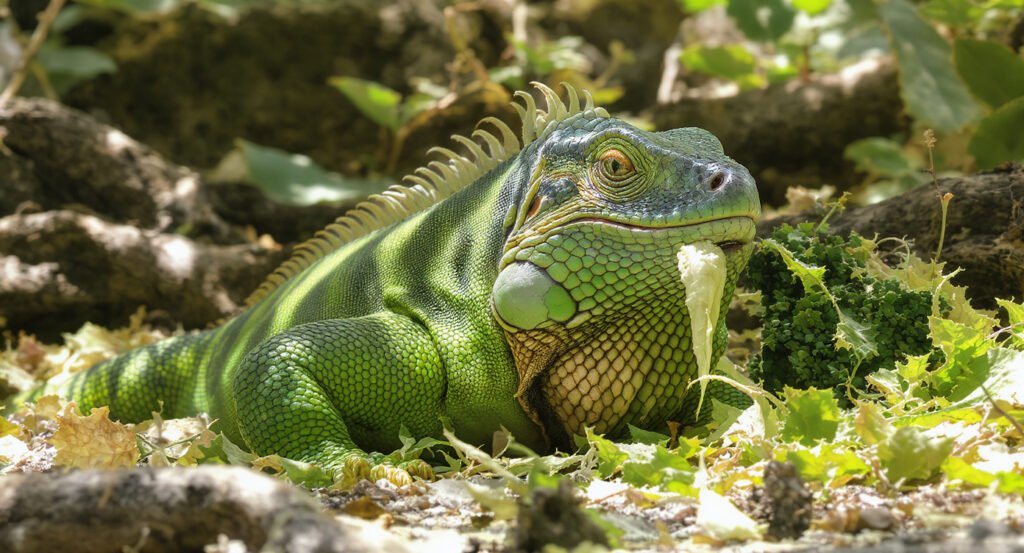
Green iguanas are one of the most popular pet reptiles, but their dietary needs are often misunderstood. These magnificent herbivores require a carefully balanced diet to thrive in captivity. Many new iguana owners make critical feeding mistakes that can lead to metabolic bone disease, organ failure, and shortened lifespans. This comprehensive guide will teach you everything you need to know about proper green iguana nutrition.
Understanding Green Iguana Dietary Requirements
Green iguanas (Iguana iguana) are strict herbivores in the wild, feeding primarily on leaves, flowers, and fruits. Unlike some reptiles that require animal protein, adult green iguanas should receive a 100% plant-based diet. Their digestive systems are specifically adapted to break down fibrous plant matter, and feeding them animal protein can cause serious health complications including kidney disease and gout.
The ideal green iguana diet consists of approximately 70-80% dark leafy greens, 15-20% vegetables, and 5-10% fruits. This ratio provides the necessary vitamins, minerals, and fiber while preventing obesity and nutritional imbalances that commonly affect captive iguanas.
Best Leafy Greens for Green Iguanas
The foundation of your iguana’s diet should be calcium-rich, nutrient-dense leafy greens. Offer a variety of the following options daily:
Worried About Your Reptile's Health?
Upload a photo and get instant AI health analysis. Catch problems before they become expensive vet bills.
Get Free Health Check →Excellent Daily Staples
Collard greens are one of the best choices for green iguanas, offering an ideal calcium-to-phosphorus ratio of approximately 14:1. Turnip greens, mustard greens, and dandelion greens are equally excellent, providing high calcium content and essential vitamins. Escarole and endive offer good nutritional value with proper calcium levels, while arugula adds variety and beneficial phytonutrients to the diet.
Good Supplementary Greens
Butternut squash leaves, hibiscus leaves, and mulberry leaves can be offered when available. Bok choy, watercress, and cilantro provide nutritional diversity but should be rotated rather than used as sole staples. These greens help prevent dietary boredom and ensure your iguana receives a wide spectrum of nutrients.
Greens to Avoid or Limit
Spinach and swiss chard contain high levels of oxalates that bind calcium and prevent absorption, making them poor choices despite their calcium content. Lettuce varieties like iceberg and romaine offer minimal nutritional value and should be avoided entirely. Cabbage and broccoli contain goitrogens that can interfere with thyroid function when fed in excess, so limit these to occasional offerings.
Vegetables and Fruits in the Iguana Diet
Recommended Vegetables
Butternut squash, acorn squash, and yellow squash provide excellent nutrition and are highly palatable. Bell peppers of all colors offer vitamin C and add color variety to meals. Green beans, snap peas, and okra contribute fiber and nutrients. Shredded carrots can be offered occasionally but should not dominate the diet due to their vitamin A content, which can become excessive.
Never Miss Early Warning Signs
AI photo analysis catches subtle health issues humans miss 80% of the time. Early detection = healthier reptile + lower vet bills.
Start Free Trial →Appropriate Fruits
Fruits should comprise only 5-10% of the total diet due to their high sugar content. Appropriate options include papaya, mango, berries, figs, and melon. These should be offered as occasional treats rather than daily staples. Avoid citrus fruits as they can cause digestive upset, and never feed avocado, which is toxic to iguanas.
Calcium and Vitamin Supplementation
Even with a well-balanced diet, green iguanas benefit from calcium supplementation. Dust fresh food with calcium powder without vitamin D3 at most feedings. Use a calcium supplement with D3 once or twice weekly if your iguana does not receive adequate UVB exposure. However, proper UVB lighting is essential and cannot be fully replaced by dietary supplementation.
A high-quality reptile multivitamin should be offered once or twice weekly. Over-supplementation can be as dangerous as deficiency, so follow product guidelines carefully and adjust based on your veterinarian’s recommendations.
Feeding Schedule and Portion Sizes
Young iguanas under two years old should be fed daily, receiving as much as they can consume in 15-20 minutes. Juvenile iguanas are growing rapidly and require consistent nutrition. Adult iguanas can be fed daily or every other day depending on their body condition and activity level.
Join thousands of successful reptile owners
Try ReptileCoach Free →A good rule of thumb is to offer a salad bowl approximately the size of your iguana’s body length. Remove uneaten food after a few hours to prevent spoilage. Fresh, clean water should always be available, though many iguanas obtain most of their hydration from their food.
Common Dietary Mistakes to Avoid
Feeding Animal Protein
One of the most harmful mistakes is feeding insects, eggs, or commercial iguana foods containing animal protein. While baby iguanas may eat insects opportunistically in the wild, this is not necessary or beneficial in captivity. Animal protein contributes to kidney disease and gout in green iguanas.
Inadequate Calcium-to-Phosphorus Ratio
Many vegetables have inverted calcium-to-phosphorus ratios, meaning they contain more phosphorus than calcium. Feeding too many of these foods leads to metabolic bone disease. Always prioritize high-calcium greens and supplement appropriately.
Over-Reliance on Fruits
Feeding too much fruit causes obesity, fatty liver disease, and dental problems in green iguanas. While fruits are nutritious in small amounts, they should never comprise more than 10% of the diet. Many captive iguanas develop preferences for sweet foods and will refuse healthier options if allowed to overindulge.
"This app saved my bearded dragon's life. The AI caught early MBD in photos I thought looked completely normal. Worth every penny!"
— Sarah K., ReptileCoach User
Get Your Free 7-Day Trial →Monotonous Diet
Feeding the same one or two foods repeatedly can lead to nutritional deficiencies despite those foods being high quality. Variety ensures comprehensive nutrition and prevents selective feeding behaviors from developing.
Food Preparation Tips
Chop all food items into appropriately sized pieces—smaller for juveniles and larger chunks for adults. Mixing different greens and vegetables together prevents selective feeding where iguanas pick out only their favorite items. Thoroughly wash all produce to remove pesticides and contaminants.
Some keepers lightly steam harder vegetables like squash to improve digestibility, though this is optional. Never feed frozen food without thawing it completely. Room temperature food is ideal, as very cold food can reduce digestive efficiency.
Monitoring Your Iguana’s Health and Diet Response
Regular monitoring helps you adjust the diet as needed. Healthy iguanas should have bright eyes, vibrant coloration, firm muscle tone, and consistent body weight. Their droppings should be well-formed with distinct brown and white portions. Loose stools may indicate too much fruit or spoiled food, while very dry droppings suggest inadequate hydration.
Worried About Your Reptile's Health?
Upload a photo and get instant AI health analysis. Catch problems before they become expensive vet bills.
Get Free Health Check →Track your iguana’s weight monthly and watch for gradual growth in juveniles or stable weight in adults. Sudden weight loss, lethargy, loss of appetite, or changes in behavior warrant veterinary attention. To make health monitoring easier and track your reptile’s diet, weight changes, and overall wellness patterns over time, track your reptile’s health on ReptileCoach. Consistent record-keeping helps you identify problems early and provides valuable information for your veterinarian.
Conclusion
Proper nutrition is the cornerstone of green iguana health. By focusing on calcium-rich leafy greens, limiting fruits, avoiding animal protein, and providing appropriate supplementation, you’ll give your iguana the best chance at a long, healthy life. Remember that dietary needs may vary slightly between individuals, so observe your iguana’s response to their diet and adjust accordingly. With attention to these guidelines and regular veterinary care, your green iguana can thrive for 15-20 years or more in captivity.
Ready to Give Your Reptile the Best Care?
Stop guessing and start knowing. Get personalized AI-powered care guidance, photo health analysis, and 24/7 expert advice for YOUR specific reptile.
Get Personalized Care Guidance
AI-powered photo analysis and daily care tracking for YOUR reptile
Try Free for 7 Days →