
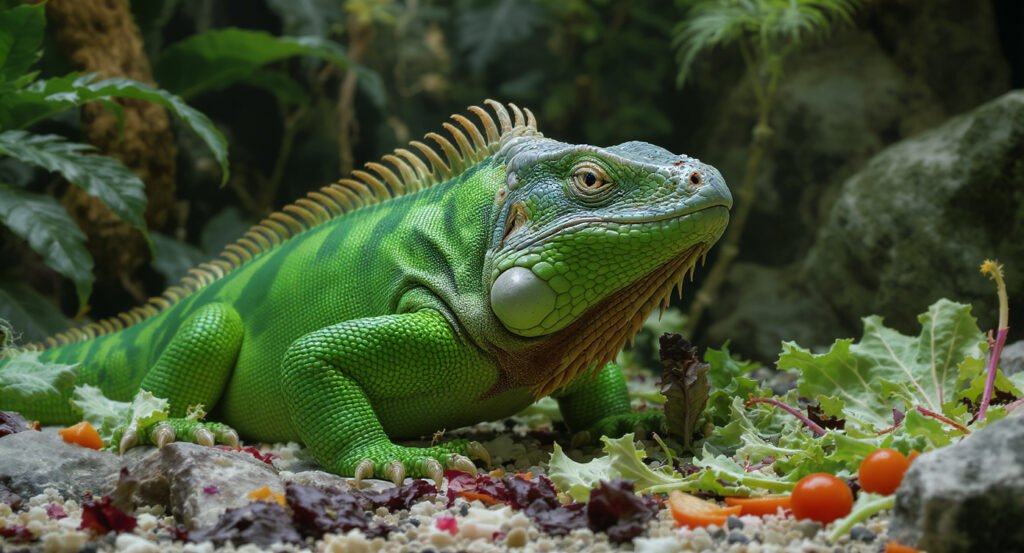
Green iguanas are one of the most popular pet reptiles, but their dietary needs are often misunderstood. These herbivorous lizards require a carefully balanced diet to thrive in captivity. Understanding what to feed your green iguana—and what to avoid—is essential for preventing health issues and ensuring a long, healthy life for your scaly companion.
What Do Green Iguanas Eat in the Wild?
In their natural habitat throughout Central and South America, green iguanas are strict herbivores. They spend their days in tree canopies feeding on leaves, flowers, and fruits. This natural diet is high in fiber, moderately high in calcium, and low in protein and fat. Replicating this nutritional profile in captivity is the key to successful iguana care.
Young iguanas in the wild consume the same plant-based diet as adults, contrary to the outdated belief that they need animal protein. Their digestive systems are specifically designed to break down plant matter, and feeding animal protein can actually lead to serious health complications including kidney disease.
The Foundation of a Healthy Green Iguana Diet
Daily Staple Vegetables
The bulk of your green iguana’s diet should consist of dark, leafy greens that are high in calcium and nutrients. These should make up approximately 80-90% of their daily intake.
Worried About Your Reptile's Health?
Upload a photo and get instant AI health analysis. Catch problems before they become expensive vet bills.
Get Free Health Check →- Collard greens
- Mustard greens
- Turnip greens
- Dandelion greens
- Escarole
- Endive
- Butternut squash
- Spaghetti squash
- Green beans
- Bell peppers (all colors)
Calcium-to-Phosphorus Ratio
One of the most critical aspects of green iguana nutrition is maintaining a proper calcium-to-phosphorus ratio of at least 2:1. Many vegetables contain phosphorus that binds to calcium, preventing absorption. This is why selecting high-calcium greens is so important for preventing metabolic bone disease.
Fruits: A Limited Treat
While green iguanas enjoy fruits, these should comprise only 10-15% of their diet. Fruits are high in sugar and low in the nutrients iguanas need for optimal health. Offer small amounts of:
- Figs
- Papaya
- Mango
- Berries
- Melon
Foods to Avoid
Certain foods are toxic or nutritionally inappropriate for green iguanas and should never be offered:
- Animal protein (insects, meat, eggs, dairy)
- Spinach and Swiss chard (high in oxalates that bind calcium)
- Iceberg lettuce (nutritionally void)
- Cabbage and broccoli (goitrogens that affect thyroid function)
- Avocado (toxic to reptiles)
- Rhubarb (toxic)
- Processed human foods
Feeding Schedule and Portion Sizes
Adult green iguanas should be fed once daily, preferably in the morning when they’re most active. Juvenile iguanas (under 18 months) may be fed twice daily to support their rapid growth. Offer a salad bowl that’s roughly the size of your iguana’s body—they should eat until satisfied and leave a small amount.
Never Miss Early Warning Signs
AI photo analysis catches subtle health issues humans miss 80% of the time. Early detection = healthier reptile + lower vet bills.
Start Free Trial →Always remove uneaten food after a few hours to prevent spoilage and bacterial growth. Fresh, clean water should be available at all times in a heavy bowl that won’t tip easily.
Common Green Iguana Diet Mistakes
Mistake #1: Feeding Animal Protein
Pet stores sometimes recommend feeding insects or commercial iguana foods containing animal protein. This outdated advice can lead to kidney failure, gout, and shortened lifespan. Green iguanas are obligate herbivores—their bodies cannot properly process animal protein.
Mistake #2: Too Much Fruit
Many owners notice their iguanas prefer sweet fruits over vegetables and make fruit the primary food. This leads to obesity, nutritional imbalances, and dental problems. Stick to the 10-15% fruit guideline regardless of your iguana’s preferences.
Mistake #3: Inadequate Variety
Feeding the same one or two vegetables daily doesn’t provide complete nutrition. Rotate through at least 5-7 different greens and vegetables weekly to ensure a broad spectrum of nutrients.
Join thousands of successful reptile owners
Try ReptileCoach Free →Mistake #4: Skipping Supplements
Even with a perfect diet, captive iguanas benefit from calcium supplementation. Dust vegetables with calcium powder (without D3 if you provide UVB lighting) 2-3 times weekly. A quality reptile multivitamin once weekly helps fill any nutritional gaps.
Preparing Your Iguana’s Meals
Proper food preparation ensures safety and digestibility. Wash all produce thoroughly to remove pesticides. Chop vegetables into bite-sized pieces appropriate for your iguana’s size—smaller pieces for juveniles, larger for adults. Mix ingredients together so your iguana can’t selectively eat only favorite items.
Some keepers lightly steam harder vegetables like squash, though raw is generally preferred and retains more nutrients. Never feed hot food—ensure everything is room temperature or slightly cool.
Expert Tips for Optimal Nutrition
- Create a weekly meal prep routine to save time and ensure variety
- Keep a food log to track what your iguana eats and identify preferences
- Adjust portion sizes based on your iguana’s body condition—ribs shouldn’t be visible, but there shouldn’t be fat deposits
- Provide UVB lighting to help with calcium absorption and vitamin D3 synthesis
- Schedule annual veterinary checkups to catch nutritional deficiencies early
Ready to track your reptile’s diet and care schedule? Try the ReptileCoach app free — your all-in-one reptile care companion.
"This app saved my bearded dragon's life. The AI caught early MBD in photos I thought looked completely normal. Worth every penny!"
— Sarah K., ReptileCoach User
Get Your Free 7-Day Trial →Conclusion
A proper green iguana diet centered on calcium-rich leafy greens, supplemented with colorful vegetables and occasional fruits, is the foundation of iguana health. By avoiding common feeding mistakes and providing nutritional variety, you’ll help your green iguana thrive for 15-20 years or more. Remember that diet works in conjunction with proper lighting, temperature, humidity, and habitat—all elements of comprehensive iguana care that lead to a happy, healthy reptile companion.
Ready to Give Your Reptile the Best Care?
Stop guessing and start knowing. Get personalized AI-powered care guidance, photo health analysis, and 24/7 expert advice for YOUR specific reptile.
Get Personalized Care Guidance
AI-powered photo analysis and daily care tracking for YOUR reptile
Try Free for 7 Days →