Red-eared sliders are among the most popular pet turtles in the world, known for their distinctive red markings and engaging personalities. However, many beginners underestimate the commitment required to create a proper habitat for these aquatic reptiles. This comprehensive guide will walk you through everything you need to know about setting up the perfect tank for your red-eared slider.
Understanding Red-Eared Slider Space Requirements
The most common mistake new turtle owners make is purchasing a tank that’s too small. Red-eared sliders grow considerably larger than most people expect, with females reaching 10-12 inches and males growing to 8-10 inches in shell length.
The general rule for red-eared slider tank size is 10 gallons of water per inch of shell length. For a full-grown adult, this means you’ll need a tank that holds at least 75-100 gallons. While you can start with a smaller tank for a hatchling, plan to upgrade as your turtle grows to avoid the stress and expense of multiple tank changes.
Essential Components of a Red-Eared Slider Tank
The Tank Itself
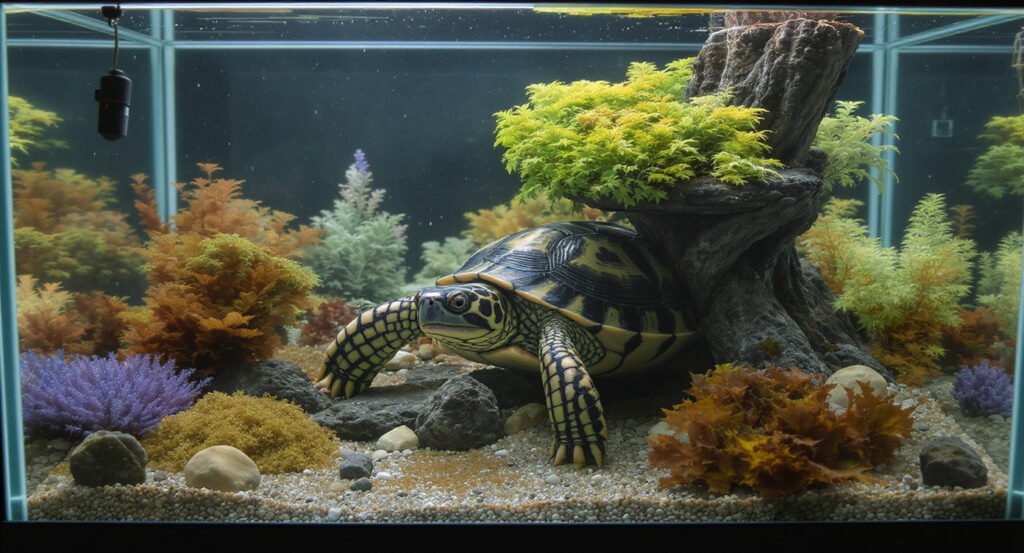
Glass aquariums are the most popular choice for red-eared sliders, though large plastic tubs or pre-formed ponds can also work well. The tank should be long and wide rather than tall, as these turtles need swimming space more than depth. A 40-gallon breeder tank (36″ x 18″ x 16″) is a good starting point for juveniles, while adults will need something closer to a 75-120 gallon tank.
Worried About Your Reptile's Health?
Upload a photo and get instant AI health analysis. Catch problems before they become expensive vet bills.
Get Free Health Check →Water Depth and Quality
Red-eared sliders are strong swimmers and need water deep enough to fully submerge and turn around comfortably. Aim for a water depth of at least 1.5 times the length of your turtle’s shell. For an adult, this typically means 12-18 inches of water.
Water quality is critical for your turtle’s health. You’ll need a powerful filtration system rated for at least twice your tank’s volume, as turtles are messy eaters and produce significant waste. Canister filters work best for large turtle tanks, though some keepers successfully use multiple hang-on-back filters.
Basking Platform
Red-eared sliders must have a dry basking area where they can completely leave the water. This basking spot serves multiple purposes: it allows them to dry off completely, prevents shell rot, helps regulate body temperature, and provides essential UVB exposure.
The basking platform should be sturdy enough to support your turtle’s full weight and positioned so that it’s easy to climb onto from the water. Commercial turtle docks work well, or you can create a DIY platform using rocks, driftwood, or egg crate. The basking area should be large enough for your turtle to fully stretch out and turn around.
Never Miss Early Warning Signs
AI photo analysis catches subtle health issues humans miss 80% of the time. Early detection = healthier reptile + lower vet bills.
Start Free Trial →Lighting and Heating Setup
Heat Lamp
Position a heat lamp over the basking area to create a temperature gradient. The basking spot should reach 85-90°F, while the water temperature should stay between 75-80°F. Use a reliable thermometer to monitor both temperatures regularly.
Standard incandescent bulbs work fine for heating, though you can also use specialized reptile basking bulbs. The wattage you’ll need depends on your room temperature and tank size, typically ranging from 50-150 watts.
UVB Lighting
This is non-negotiable for red-eared slider health. UVB lighting enables your turtle to synthesize vitamin D3, which is essential for calcium absorption and shell development. Without proper UVB exposure, turtles develop metabolic bone disease, a serious and potentially fatal condition.
Use a reptile-specific UVB bulb rated at 5.0-10.0 UVB. Linear fluorescent tubes provide better coverage than compact bulbs. Position the UVB light 10-12 inches above the basking area and replace it every 6-12 months, as UVB output degrades over time even if the bulb still produces visible light.
Join thousands of successful reptile owners
Try ReptileCoach Free →Keep your lighting on a consistent 12-hour cycle. Track your pet’s care schedule with our free app to stay on top of feeding times, tank maintenance, and bulb replacements.
Substrate Considerations
Many experienced keepers recommend keeping red-eared slider tanks bare-bottomed (no substrate) as this makes cleaning much easier and prevents impaction if your turtle accidentally ingests substrate while feeding.
If you prefer a more natural look, large river rocks (too large to swallow) can work, though they’ll require regular cleaning. Avoid gravel, sand, and small pebbles entirely, as these pose serious impaction risks.
Water Filtration and Maintenance
Even with excellent filtration, red-eared slider tanks require regular maintenance. Plan to perform 25-50% water changes weekly, depending on your tank size, filtration, and how many turtles you have.
"This app saved my bearded dragon's life. The AI caught early MBD in photos I thought looked completely normal. Worth every penny!"
— Sarah K., ReptileCoach User
Get Your Free 7-Day Trial →When doing water changes, use a dechlorinator to treat tap water before adding it to the tank. Match the temperature of new water to your tank temperature to avoid shocking your turtle.
Clean the filter media monthly, but never replace all the filter media at once, as this removes beneficial bacteria. Rinse mechanical filter media in old tank water rather than tap water to preserve bacterial colonies.
Additional Equipment Checklist
- Water heater (if room temperature drops below 75°F)
- Thermometers for both water and basking area
- Timer for lights to maintain consistent photoperiod
- Water test kit for monitoring ammonia, nitrite, and nitrate levels
- Algae scraper or magnetic cleaner
- Siphon or gravel vacuum for water changes
- Backup bulbs for both heat and UVB lighting
Common Setup Mistakes to Avoid
Don’t use decorative items that could trap your turtle or have sharp edges. Red-eared sliders are curious and surprisingly strong, so anything in the tank needs to be secure and turtle-safe.
Avoid housing multiple turtles together unless you have extensive experience. Red-eared sliders can be territorial and aggressive, especially during feeding time. If you do keep multiple turtles, you’ll need significantly more space and basking areas.
Worried About Your Reptile's Health?
Upload a photo and get instant AI health analysis. Catch problems before they become expensive vet bills.
Get Free Health Check →Never rely on natural sunlight through a window as your UVB source. Glass filters out UVB rays, and the unpredictable temperature fluctuations can stress or harm your turtle.
Getting Started
Setting up a proper red-eared slider habitat requires significant upfront investment in both money and time, but it’s essential for your turtle’s long-term health and wellbeing. These turtles can live 20-40 years with proper care, so view your setup as a long-term commitment rather than a one-time expense.
Start by purchasing the largest tank you can afford and accommodate, invest in quality filtration and lighting, and establish a consistent maintenance routine. Your red-eared slider will reward your efforts with years of fascinating behavior and personality.
Remember that while this guide covers the basics, every turtle is an individual. Monitor your pet closely during the first few weeks, adjust temperatures and feeding as needed, and don’t hesitate to consult a reptile veterinarian if you have concerns about your turtle’s health or behavior.
Never Miss Early Warning Signs
AI photo analysis catches subtle health issues humans miss 80% of the time. Early detection = healthier reptile + lower vet bills.
Start Free Trial →Ready to Give Your Reptile the Best Care?
Stop guessing and start knowing. Get personalized AI-powered care guidance, photo health analysis, and 24/7 expert advice for YOUR specific reptile.
Get Personalized Care Guidance
AI-powered photo analysis and daily care tracking for YOUR reptile
Try Free for 7 Days →