
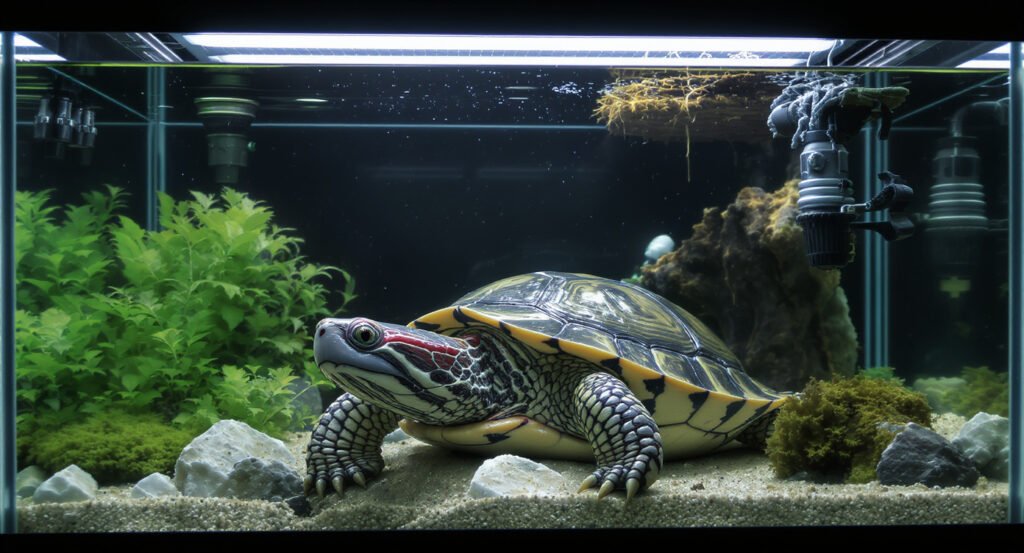
Red-eared sliders are among the most popular pet turtles in the world, known for their distinctive red patches behind their eyes and engaging personalities. However, these semi-aquatic turtles require a carefully planned habitat to thrive. Whether you’re a first-time turtle owner or looking to upgrade your current setup, this comprehensive guide will walk you through everything you need to create the perfect red-eared slider environment.
Understanding Red-Eared Slider Needs
Before diving into the specifics of habitat setup, it’s important to understand what red-eared sliders need to stay healthy. These turtles are native to the southern United States and require both aquatic and terrestrial environments. In the wild, they spend their days basking on logs and swimming in ponds, and your setup should replicate these natural behaviors as closely as possible.
Red-eared sliders can grow quite large—females often reach 10-12 inches in shell length, while males typically stay around 8-9 inches. This growth potential means you’ll need to plan for a substantial habitat from the start or be prepared to upgrade as your turtle matures.
Tank Size Requirements
One of the most common mistakes new turtle owners make is underestimating the space their red-eared slider will need. The general rule is to provide 10 gallons of water per inch of shell length. For a full-grown slider, this means a minimum of 75-100 gallons, though bigger is always better.
Worried About Your Reptile's Health?
Upload a photo and get instant AI health analysis. Catch problems before they become expensive vet bills.
Get Free Health Check →For hatchlings and juveniles, you can start with a 40-gallon tank, but be prepared to upgrade within a year or two. Many experienced keepers recommend starting with a larger tank from the beginning to avoid the expense and hassle of multiple upgrades. Stock tanks, plastic tubs, and custom-built enclosures can be cost-effective alternatives to traditional glass aquariums.
Water Setup and Filtration
Water quality is absolutely critical for red-eared slider health. These turtles are messy eaters and produce significant waste, so you’ll need a robust filtration system. Look for a canister filter rated for at least twice your tank’s water volume—if you have a 75-gallon tank, use a filter rated for 150 gallons.
Water Depth and Volume
Your red-eared slider needs enough water to swim comfortably and turn around easily. A good rule of thumb is to maintain water depth of at least 1.5 to 2 times your turtle’s shell length. For adult turtles, this typically means 12-18 inches of water depth.
Water Temperature
Maintain water temperature between 75-78°F (24-26°C) using a submersible aquarium heater. Choose a heater with a protective guard to prevent your turtle from burning itself or breaking the glass. Always use a thermometer to monitor temperature accurately.
Never Miss Early Warning Signs
AI photo analysis catches subtle health issues humans miss 80% of the time. Early detection = healthier reptile + lower vet bills.
Start Free Trial →Water Quality Maintenance
Perform weekly partial water changes of 25-50% to maintain water quality. Test water parameters regularly using an aquarium test kit, monitoring ammonia, nitrites, and pH levels. Dechlorinate tap water before adding it to the tank using a water conditioner.
Basking Area Essentials
Red-eared sliders must have a dry basking area where they can completely leave the water. This basking spot serves multiple critical functions: it allows them to dry off completely (preventing shell rot), thermoregulate their body temperature, and absorb UVB rays necessary for calcium metabolism.
Creating the Basking Platform
Your basking area should be large enough for your turtle to turn around comfortably and positioned so your slider can easily climb onto it. Commercial turtle docks, stacked rocks, or custom-built platforms all work well. Ensure the surface has good traction and slopes gently from the water to prevent climbing difficulties.
Basking Temperature
The basking spot should reach 85-90°F (29-32°C). Use a basking bulb positioned above the platform to achieve this temperature. Always measure the temperature at the basking surface using a thermometer or temperature gun, not just estimating based on bulb wattage.
Join thousands of successful reptile owners
Try ReptileCoach Free →Lighting Requirements
Proper lighting is non-negotiable for red-eared slider health. You’ll need two types of lighting: heat and UVB.
UVB Lighting
UVB light is essential for vitamin D3 synthesis, which enables calcium absorption. Without adequate UVB exposure, red-eared sliders develop metabolic bone disease, a serious and potentially fatal condition. Use a high-quality reptile UVB bulb (10.0 or 12% UVB) positioned 10-12 inches above the basking area.
Replace UVB bulbs every 6-12 months, even if they still produce visible light, as UVB output degrades over time. Keep lights on for 10-12 hours daily to simulate natural day/night cycles.
Heat Lighting
A separate basking bulb (incandescent or halogen) provides the heat needed to reach proper basking temperatures. The wattage required depends on your room temperature and setup—start with a 75-100 watt bulb and adjust as needed based on temperature measurements.
"This app saved my bearded dragon's life. The AI caught early MBD in photos I thought looked completely normal. Worth every penny!"
— Sarah K., ReptileCoach User
Get Your Free 7-Day Trial →Substrate Considerations
Many experienced keepers recommend a bare-bottom tank for red-eared sliders. This makes cleaning much easier and eliminates the risk of substrate ingestion. However, if you prefer a more natural look, large river rocks (too large to swallow) can be used. Avoid gravel, sand, and small rocks that your turtle might accidentally ingest while feeding.
Additional Equipment and Accessories
Beyond the basics, consider these additions to optimize your red-eared slider setup:
- Water conditioner: For treating tap water before adding it to the tank
- Aquarium thermometer: For monitoring water temperature
- Temperature gun: For checking basking spot temperature
- Timer: For automating lighting schedules
- Feeding platform: To reduce water contamination during meals
- Hide spots: While not essential, some turtles appreciate underwater hiding places
Setup Maintenance Schedule
Maintaining your red-eared slider habitat requires consistent effort. Establish a routine that includes daily spot cleaning (removing uneaten food and waste), weekly partial water changes, monthly deep cleaning of decorations and filters, and quarterly replacement of filter media. Regular maintenance prevents water quality issues and keeps your turtle healthy.
Monitor your turtle’s behavior and appearance regularly. A healthy red-eared slider is active, alert, has clear eyes, smooth shell growth, and a good appetite. Any changes in these indicators may signal environmental or health issues requiring attention.
Worried About Your Reptile's Health?
Upload a photo and get instant AI health analysis. Catch problems before they become expensive vet bills.
Get Free Health Check →Ready to track your reptile’s health and care schedule? Try ReptileCoach App free today — the ultimate tool for reptile owners.
Final Thoughts on Red-Eared Slider Setup
Creating the perfect red-eared slider habitat requires significant initial investment in both time and money, but the reward is a healthy, thriving turtle that can live for 20-40 years or more. Focus on getting the fundamentals right: adequate space, clean water, proper filtration, appropriate temperatures, and quality UVB lighting. With these elements in place, your red-eared slider will have everything needed to live a long, healthy, and active life in your care.
Remember that every turtle is an individual, and you may need to make adjustments based on your specific turtle’s behavior and preferences. Stay observant, maintain consistent care routines, and don’t hesitate to consult with a reptile veterinarian if you have concerns about your setup or your turtle’s health.
Ready to Give Your Reptile the Best Care?
Stop guessing and start knowing. Get personalized AI-powered care guidance, photo health analysis, and 24/7 expert advice for YOUR specific reptile.
Get Personalized Care Guidance
AI-powered photo analysis and daily care tracking for YOUR reptile
Try Free for 7 Days →