Red-eared slider turtles are among the most popular pet turtles in the world, known for their distinctive red markings and engaging personalities. However, setting up a proper habitat for these semi-aquatic reptiles requires careful planning and the right equipment. This comprehensive guide will walk you through everything you need to create the perfect red-eared slider turtle setup for your new pet.
Understanding Red-Eared Slider Turtle Needs
Before diving into the setup process, it’s essential to understand what red-eared sliders need to thrive. These turtles are native to the southern United States and require both aquatic and terrestrial environments. They can live 20-40 years with proper care, making them a long-term commitment that deserves a well-planned habitat from the start.
Choosing the Right Tank Size
Tank size is one of the most critical factors in your red-eared slider setup. Many beginners make the mistake of starting with a tank that’s too small, leading to stunted growth and health problems.
Minimum Tank Requirements
- Hatchlings (up to 2 inches): 20-gallon tank minimum
- Juveniles (2-4 inches): 40-gallon tank minimum
- Adults (6-12 inches): 75-125 gallon tank minimum
- Multiple turtles: Add 10 gallons per additional turtle
A good rule of thumb is to provide 10 gallons of water per inch of shell length. Since red-eared sliders can grow up to 12 inches, planning for a larger tank from the beginning can save you money and hassle in the long run.
Worried About Your Reptile's Health?
Upload a photo and get instant AI health analysis. Catch problems before they become expensive vet bills.
Get Free Health Check →Essential Equipment for Your Red-Eared Slider Setup
Filtration System
Red-eared sliders are messy eaters and produce significant waste. A high-quality filtration system is non-negotiable for maintaining water quality and your turtle’s health.
- Choose a canister filter rated for 2-3 times your tank’s water volume
- Consider filters designed specifically for turtle tanks
- Plan to clean or replace filter media regularly
- Perform partial water changes (25-30%) weekly even with filtration
Heating and Lighting
Proper temperature regulation is crucial for red-eared slider health, affecting everything from digestion to immune function.
- Water heater: Maintain water temperature between 75-80°F
- Basking lamp: Create a basking spot of 85-90°F
- UVB lighting: Essential for calcium absorption and shell health (10-12 hours daily)
- Timer: Automate your lighting schedule for consistency
Basking Platform
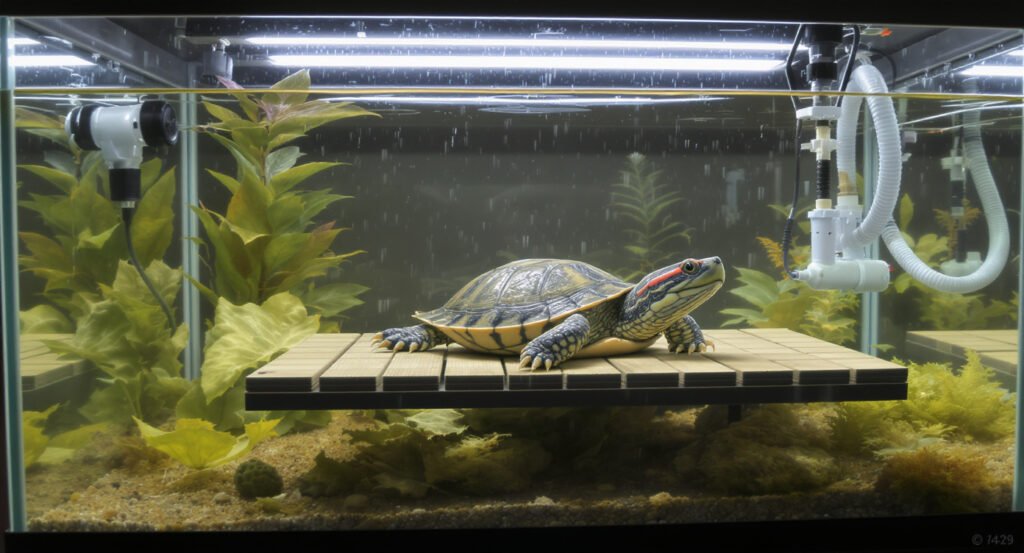
Red-eared sliders need a dry area where they can completely leave the water to bask, dry off, and regulate their body temperature.
- Should be easily accessible from the water
- Large enough for your turtle to turn around comfortably
- Positioned under the basking lamp
- Textured surface to prevent slipping
Setting Up Your Red-Eared Slider Habitat
Step 1: Position Your Tank
Place your tank on a sturdy stand away from direct sunlight, drafts, and high-traffic areas. Remember that a filled 75-gallon tank can weigh over 600 pounds, so ensure your floor can support the weight.
Never Miss Early Warning Signs
AI photo analysis catches subtle health issues humans miss 80% of the time. Early detection = healthier reptile + lower vet bills.
Start Free Trial →Step 2: Install Equipment
Set up your filtration system, water heater, and basking platform before adding water. Position the basking area under where your heat lamp will be mounted.
Step 3: Add Water
Fill the tank with dechlorinated water to a depth that allows your turtle to swim comfortably. The water should be deep enough for your turtle to flip over if it lands on its back, typically 1.5-2 times the turtle’s shell length.
Step 4: Set Up Lighting
Mount your basking lamp and UVB light above the basking area. The UVB bulb should be 10-12 inches from the basking spot and replaced every 6-12 months, even if it still produces visible light.
Step 5: Test and Adjust
Use thermometers to verify water and basking temperatures. Allow the system to run for 24-48 hours before introducing your turtle, ensuring all equipment functions properly.
Join thousands of successful reptile owners
Try ReptileCoach Free →Substrate and Decorations
While not strictly necessary, substrate and decorations can enhance your turtle’s environment and your viewing pleasure.
Substrate Options
- Bare bottom: Easiest to clean, recommended for beginners
- Large river rocks: Attractive but require regular cleaning
- Sand: Natural appearance but can be difficult to maintain
Avoid small gravel that turtles might ingest, leading to impaction.
Safe Decorations
- Smooth rocks and driftwood
- Live or artificial aquatic plants
- PVC pipes for hiding spots
- Ensure all items are too large to swallow
Water Quality and Maintenance
Maintaining excellent water quality is perhaps the most important aspect of red-eared slider care.
Regular Maintenance Schedule
- Daily: Remove uneaten food and visible waste
- Weekly: 25-30% water change, test water parameters
- Monthly: Deep clean filter, inspect all equipment
- Every 6 months: Replace UVB bulb
Water Parameters to Monitor
- Temperature: 75-80°F
- pH: 6.5-8.0
- Ammonia: 0 ppm
- Nitrite: 0 ppm
- Nitrate: Below 40 ppm
Common Setup Mistakes to Avoid
Learning from others’ mistakes can save you time, money, and stress:
"This app saved my bearded dragon's life. The AI caught early MBD in photos I thought looked completely normal. Worth every penny!"
— Sarah K., ReptileCoach User
Get Your Free 7-Day Trial →- Starting with a tank that’s too small
- Skipping the UVB lighting
- Using inadequate filtration
- Placing the tank in direct sunlight
- Not providing a proper basking area
- Forgetting to dechlorinate water
- Overcrowding with multiple turtles
Take Your Red-Eared Slider Care to the Next Level
Setting up the perfect habitat is just the beginning of your journey as a red-eared slider owner. Proper care involves monitoring your turtle’s health, maintaining optimal conditions, and staying informed about best practices. The Reptile Coach app provides personalized care schedules, feeding reminders, health tracking, and expert guidance to help you give your red-eared slider the best possible care. Whether you’re a first-time turtle owner or looking to optimize your current setup, having a dedicated care companion can make all the difference in your turtle’s long-term health and happiness.
Conclusion
Creating the ideal red-eared slider turtle setup requires an initial investment of time and resources, but the reward is a healthy, active turtle that can be your companion for decades. Focus on providing adequate space, proper filtration, appropriate heating and lighting, and a suitable basking area. With consistent maintenance and attention to water quality, your red-eared slider will thrive in its new home. Remember that turtle care is a learning process, and staying informed about your pet’s needs will help you provide the best possible environment for years to come.
Ready to Give Your Reptile the Best Care?
Stop guessing and start knowing. Get personalized AI-powered care guidance, photo health analysis, and 24/7 expert advice for YOUR specific reptile.
Get Personalized Care Guidance
AI-powered photo analysis and daily care tracking for YOUR reptile
Try Free for 7 Days →