If you’re searching for a beginner-friendly snake that thrives in compact enclosures, the sand boa might be your perfect match. These small, docile constrictors have become increasingly popular among reptile enthusiasts, and for good reason. Sand boas are hardy, low-maintenance, and adapt well to captive environments, making them ideal for first-time snake owners or those with limited space.
In this comprehensive guide, we’ll walk you through everything you need to know about sand boa care, from setting up the perfect habitat to understanding their unique behaviors and health needs.
Understanding Sand Boas: Species Overview
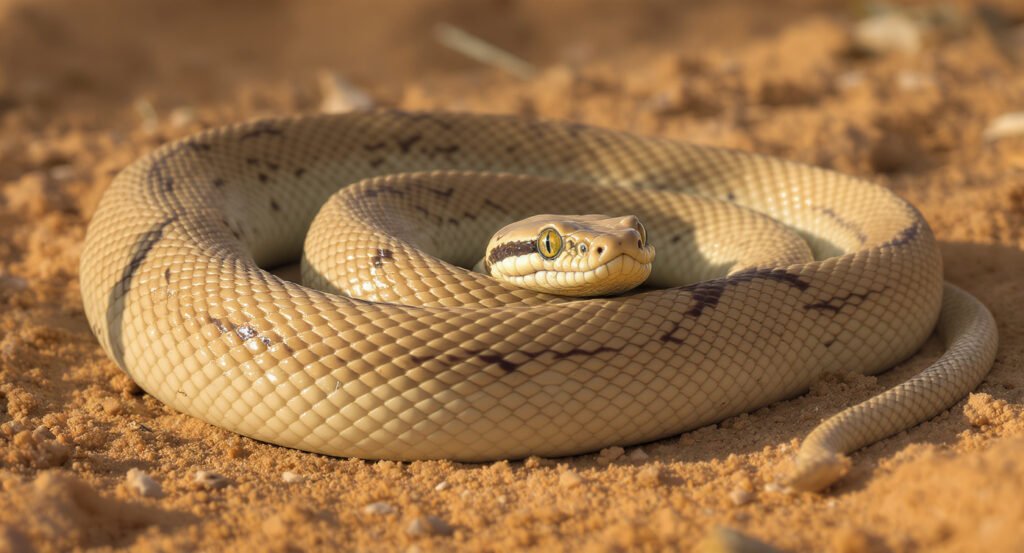
Sand boas belong to the Erycinae subfamily, with the Kenyan sand boa (Eryx colubrinus) being the most common species in the pet trade. These snakes typically reach 15-30 inches in length, with females being notably larger than males. Their stocky, cylindrical bodies and smooth scales are perfectly adapted for their burrowing lifestyle, and they come in beautiful color morphs ranging from bright orange to cream and brown patterns.
Enclosure and Substrate Needs
One of the most appealing aspects of sand boa care is their modest space requirements. A 10-gallon terrarium is suitable for juveniles, while adults thrive in 20-gallon long enclosures. Since sand boas are terrestrial burrowers rather than climbers, floor space matters more than height.
Worried About Your Reptile's Health?
Upload a photo and get instant AI health analysis. Catch problems before they become expensive vet bills.
Get Free Health Check →Your enclosure should include:
- A secure, locking lid to prevent escapes
- At least two hide boxes (one on the warm side, one on the cool side)
- A shallow water dish that’s heavy enough not to tip over
- Minimal decorations to maximize usable space
Regarding substrate, despite their name, sand boas shouldn’t be kept on pure sand, which can cause impaction if ingested. Aspen shavings are the gold standard substrate for these snakes, allowing natural burrowing behavior while remaining safe and easy to clean. The substrate should be 3-4 inches deep to accommodate their digging instincts. Alternatives include coconut husk bedding or reptile-safe paper products, though aspen typically provides the best combination of functionality and naturalistic behavior.
Temperature and Humidity Setup
Creating the proper thermal gradient is crucial for your sand boa’s health and digestion. These desert-dwelling snakes need a warm basking spot of 90-95°F on one end of the enclosure, with the cool side maintained at 75-80°F. This gradient allows your snake to thermoregulate by moving between zones as needed.
The most reliable heating method is an under-tank heating pad (UTH) covering one-third to one-half of the enclosure bottom, controlled by a thermostat. Always use a thermostat to prevent overheating and potential burns. Place a digital thermometer probe at substrate level on both the warm and cool ends to monitor temperatures accurately.
Never Miss Early Warning Signs
AI photo analysis catches subtle health issues humans miss 80% of the time. Early detection = healthier reptile + lower vet bills.
Start Free Trial →Humidity requirements are modest for sand boas, ideally between 30-50%. These snakes are adapted to arid environments and don’t require the high humidity many tropical species need. However, you may want to slightly increase humidity during shedding periods by lightly misting one section of the enclosure or providing a humid hide box filled with damp sphagnum moss.
Feeding Schedule and Diet
Sand boas are efficient eaters with straightforward dietary needs. In captivity, they thrive on a diet of appropriately-sized frozen-thawed rodents. The prey item should be roughly the same width as the thickest part of your snake’s body—never larger.
Feeding schedule by age:
- Hatchlings and juveniles: One appropriately-sized pinky or fuzzy mouse every 5-7 days
- Sub-adults: One small to medium mouse every 7-10 days
- Adults: One adult mouse or two smaller mice every 10-14 days
Always feed frozen-thawed prey rather than live rodents to prevent injury to your snake. Thaw the prey completely in warm water, then use feeding tongs to offer it to your snake. Many sand boas are enthusiastic feeders and strike readily, though some may prefer to eat while buried in their substrate. If your snake doesn’t eat immediately, leave the prey item in the enclosure for an hour before removing it.
Join thousands of successful reptile owners
Try ReptileCoach Free →Handling Tips and Techniques
Sand boas are generally docile and tolerate handling well, though their temperament can vary by individual. Their calm nature makes them excellent choices for nervous beginners who might be intimidated by more active species.
Best practices for handling include:
- Wait 48 hours after feeding before handling to prevent regurgitation
- Start with brief 5-10 minute sessions and gradually increase duration
- Support the snake’s body with both hands, allowing it to move freely
- Handle 2-3 times per week to maintain tameness without causing stress
- Wash your hands before and after handling
Sand boas rarely bite, but if yours seems defensive, it may be stressed or confusing your hand with food. Most defensive behavior subsides with regular, gentle handling. These snakes are strong for their size, so be prepared for their muscular bodies—it’s part of their charm!
Temperament and Natural Behavior
Understanding your sand boa’s natural behaviors will help you appreciate this unique species and recognize normal versus abnormal activity. Sand boas are fossorial, meaning they spend most of their time buried beneath the substrate. Don’t be alarmed if you rarely see your snake—this burrowing behavior is completely normal and healthy.
"This app saved my bearded dragon's life. The AI caught early MBD in photos I thought looked completely normal. Worth every penny!"
— Sarah K., ReptileCoach User
Get Your Free 7-Day Trial →You’ll typically observe your sand boa most during:
- Evening hours when they become more active
- Feeding time
- When they’re cruising for water
- During breeding season (if you have multiple snakes)
Sand boas are ambush predators in the wild, lying buried with just their eyes exposed, waiting to strike passing prey. In captivity, they maintain this instinct, often positioning themselves just below the substrate surface. Their calm, sedentary nature means they have minimal exercise requirements compared to more active snake species.
Health Considerations and Common Issues
Sand boas are hardy snakes with few health problems when kept under proper conditions. However, being aware of potential issues helps you catch problems early.
Watch for these signs of good health:
Worried About Your Reptile's Health?
Upload a photo and get instant AI health analysis. Catch problems before they become expensive vet bills.
Get Free Health Check →- Clear, bright eyes (except during shed cycle)
- Smooth, complete sheds
- Regular feeding response
- Firm, rounded body condition
- Active tongue flicking when handled
Common health concerns include:
Respiratory infections: Caused by temperatures that are too cool or improper humidity. Symptoms include wheezing, mucus around the mouth, and lethargy.
Mites: Tiny parasites that appear as moving black dots. Regular enclosure maintenance and quarantining new animals prevents infestations.
Incomplete sheds: Often result from low humidity. Retained eye caps or tail sheds require attention to prevent complications.
Never Miss Early Warning Signs
AI photo analysis catches subtle health issues humans miss 80% of the time. Early detection = healthier reptile + lower vet bills.
Start Free Trial →Obesity: Sand boas are prone to becoming overweight in captivity. Maintain proper feeding schedules and avoid overfeeding.
Schedule annual veterinary checkups with a reptile-experienced vet, and don’t hesitate to seek professional help if you notice concerning symptoms.
Tracking Your Sand Boa’s Care
Maintaining consistent care records helps you identify patterns, track feeding schedules, and monitor your snake’s health over time. Many successful reptile keepers use dedicated apps to log feedings, sheds, weights, and other important data points.
If you’re looking for an easy way to organize your sand boa care routine, check out the Reptile Coach app, designed specifically for tracking and optimizing your reptile husbandry practices.
Join thousands of successful reptile owners
Try ReptileCoach Free →Final Thoughts: Is a Sand Boa Right for You?
Sand boas represent an excellent choice for beginners and experienced keepers alike. Their small size, simple care requirements, docile temperament, and minimal space needs make them particularly appealing for apartment dwellers or those with limited room for large enclosures.
While you won’t have a snake that’s constantly visible or dramatically active, you’ll have a fascinating pet that demonstrates unique natural behaviors and remains a pleasure to handle. With proper care, your sand boa can live 15-30 years, providing decades of companionship.
Whether you’re drawn to their beautiful color morphs, impressed by their easy care requirements, or simply charmed by their stubby-tailed appearance, sand boas make wonderful first snakes and worthy additions to any collection.
Ready to Give Your Reptile the Best Care?
Stop guessing and start knowing. Get personalized AI-powered care guidance, photo health analysis, and 24/7 expert advice for YOUR specific reptile.
Get Personalized Care Guidance
AI-powered photo analysis and daily care tracking for YOUR reptile
Try Free for 7 Days →