
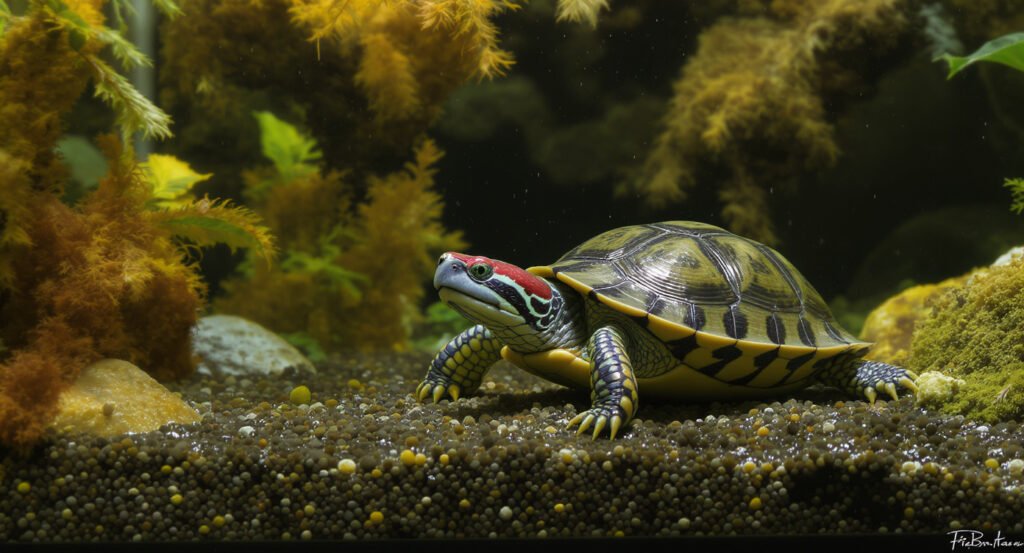
Red-eared slider turtles are among the most popular pet turtles in the world, known for their distinctive red stripe behind each eye and their engaging personalities. While they make wonderful companions, these semi-aquatic reptiles require specific habitat conditions to thrive. This comprehensive guide will walk you through everything you need to create the perfect setup for your red-eared slider.
Understanding Red-Eared Slider Requirements
Before diving into equipment lists, it’s important to understand what red-eared sliders need to stay healthy. These turtles are native to the southern United States and require both aquatic and terrestrial environments. They’re also surprisingly large—adults commonly reach 8-12 inches in shell length, with females growing even larger. A proper setup accounts for their size, behavior, and long lifespan of 20-40 years in captivity.
Tank Size: Bigger Is Always Better
The most common mistake new turtle owners make is buying a tank that’s too small. While hatchlings can temporarily live in a 20-gallon tank, you’ll need to upgrade quickly. A good rule of thumb is 10 gallons of water per inch of shell length. For an adult red-eared slider, this means a minimum of 75-100 gallons, though 125 gallons or larger is ideal.
Consider investing in a large tank from the start or plan for upgrades as your turtle grows. Glass aquariums work well, but large plastic tubs or pre-formed pond liners can be more economical alternatives for adult turtles. Whatever you choose, ensure it’s sturdy enough to hold the weight of water and decorations.
Worried About Your Reptile's Health?
Upload a photo and get instant AI health analysis. Catch problems before they become expensive vet bills.
Get Free Health Check →Water Quality and Filtration
Red-eared sliders are messy eaters and produce significant waste, making powerful filtration absolutely essential. Your filter should be rated for at least 2-3 times your tank’s water volume. For a 75-gallon tank, use a filter rated for 150-200 gallons.
Filter Options
Canister filters are the gold standard for turtle tanks due to their superior mechanical and biological filtration. They’re quieter than hang-on-back filters and can handle the bioload turtles produce. Popular choices include the Fluval FX series or the Penn-Plax Cascade line.
Even with excellent filtration, plan to perform partial water changes of 25-30% weekly. Use a dechlorinator to treat tap water before adding it to the tank. Monitor water quality with a test kit, checking for ammonia, nitrites, and nitrates regularly.
Basking Area: A Critical Component
Red-eared sliders need a dry basking area where they can completely leave the water to thermoregulate and dry off. The basking platform should be stable, easy to climb onto, and large enough for your turtle to fit completely.
Never Miss Early Warning Signs
AI photo analysis catches subtle health issues humans miss 80% of the time. Early detection = healthier reptile + lower vet bills.
Start Free Trial →Basking Platform Ideas
- Commercial turtle docks: Floating or suction-cup platforms specifically designed for turtles
- DIY platforms: Slate, cork bark, or egg crate louvers arranged above the water line
- River rocks: Large, smooth stones stacked to create a ramp (ensure they’re stable and won’t shift)
The basking area should be positioned under your heat and UVB lamps, and should be about 10 degrees Fahrenheit warmer than the water temperature.
Lighting: UVB and Heat Are Non-Negotiable
Proper lighting is where many beginners cut corners, but it’s essential for turtle health. Red-eared sliders require two types of lighting: a heat lamp and a UVB bulb.
Heat Lamp
Use a basking bulb or heat lamp to create a basking spot temperature of 88-95°F. The wattage you need depends on your room temperature and the distance from the bulb to the basking area—typically 75-150 watts. Use a digital thermometer with a probe to monitor the basking temperature accurately.
UVB Lighting
UVB light is critical for vitamin D3 synthesis, which allows turtles to metabolize calcium properly. Without adequate UVB, turtles develop metabolic bone disease, a serious and often fatal condition. Use a reptile-specific UVB bulb rated 5.0-10.0 UVB, such as Zoo Med’s ReptiSun or Arcadia’s D3 bulbs.
Join thousands of successful reptile owners
Try ReptileCoach Free →Replace UVB bulbs every 6-12 months even if they still produce visible light, as UVB output diminishes over time. Position the UVB bulb 10-12 inches above the basking area, and ensure no glass or plastic blocks the UV rays.
Maintain a photoperiod of 10-12 hours of light per day. Using a timer ensures consistency, which helps regulate your turtle’s natural circadian rhythms.
Water Temperature and Heating
The water temperature should be maintained between 75-80°F for adult red-eared sliders. Hatchlings prefer slightly warmer water, around 78-82°F. Use a submersible aquarium heater rated for your tank size, and always use a heater guard to prevent your turtle from burning itself or breaking the heater.
Place a reliable aquatic thermometer in the water to monitor temperature continuously. If your room temperature is stable and warm, you may not need a water heater, but most setups benefit from one.
"This app saved my bearded dragon's life. The AI caught early MBD in photos I thought looked completely normal. Worth every penny!"
— Sarah K., ReptileCoach User
Get Your Free 7-Day Trial →Substrate: To Use or Not to Use
Many experienced turtle keepers recommend a bare-bottom tank for red-eared sliders. This makes cleaning significantly easier and eliminates the risk of impaction from accidentally ingested substrate. If you prefer a more natural look, large river rocks too big to swallow can work, but they make cleaning more difficult.
Avoid gravel, small pebbles, or sand with red-eared sliders, as they can ingest these materials while feeding, potentially causing fatal impactions.
Diet and Feeding Schedule
Young red-eared sliders are primarily carnivorous, but adults become increasingly omnivorous. Hatchlings and juveniles should be fed daily, while adults do well with feeding every other day.
Food Options
- Commercial pellets: High-quality turtle pellets should form the base of the diet (Mazuri, ReptoMin, or Hikari)
- Protein: Feeder fish, earthworms, crickets, and occasional shrimp
- Vegetables: Leafy greens like dandelion greens, red leaf lettuce, and aquatic plants like anacharis
- Occasional treats: Small amounts of fruits or freeze-dried insects
Feed an amount roughly equal to the size of your turtle’s head, or what they can consume in 15-20 minutes. Remove uneaten food promptly to maintain water quality.
Worried About Your Reptile's Health?
Upload a photo and get instant AI health analysis. Catch problems before they become expensive vet bills.
Get Free Health Check →Routine Maintenance Checklist
Keeping your red-eared slider healthy requires consistent maintenance. Here’s a schedule to follow:
- Daily: Check water temperature, ensure lights are functioning, feed (for juveniles)
- Weekly: 25% water change, remove waste and uneaten food, clean basking area
- Monthly: Clean filter media, inspect equipment for wear, check UVB bulb age
- Every 6 months: Replace UVB bulb (if applicable), deep clean tank and decorations
Track Your Turtle Care with Ease
Managing all these care requirements can feel overwhelming at first, especially when you’re new to turtle keeping. Keeping detailed records of water changes, feeding schedules, and equipment maintenance helps ensure your red-eared slider gets consistent, optimal care. If you want to simplify your turtle care routine and never miss an important task, track your red-eared slider care with tools designed specifically for reptile owners. Building good habits from day one sets both you and your turtle up for decades of success together.
Ready to Give Your Reptile the Best Care?
Stop guessing and start knowing. Get personalized AI-powered care guidance, photo health analysis, and 24/7 expert advice for YOUR specific reptile.
Get Personalized Care Guidance
AI-powered photo analysis and daily care tracking for YOUR reptile
Try Free for 7 Days →