
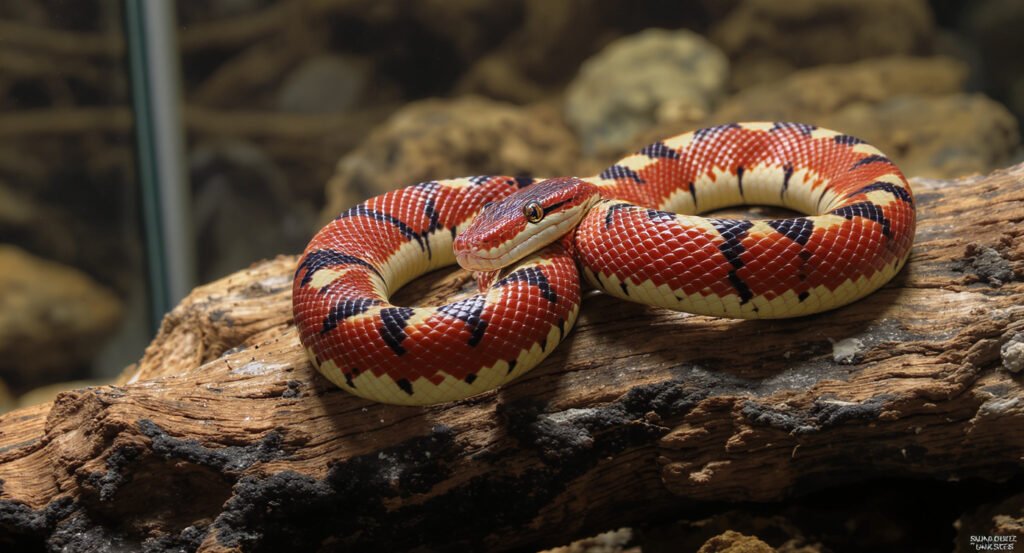
Milk snakes are among the most popular pet snakes for beginners, and for good reason. These beautiful, docile serpents are relatively easy to care for, come in stunning color variations, and typically live 15-20 years with proper care. Whether you’re considering your first reptile or adding to your collection, this comprehensive milk snake care guide will help you provide the best possible home for your new pet.
Why Milk Snakes Make Great Beginner Pets
Milk snakes (Lampropeltis triangulum) are non-venomous constrictors native to North and Central America. They’ve earned their reputation as excellent starter snakes for several compelling reasons:
- Manageable size: Most milk snakes reach 3-4 feet in length, making them easy to handle and house
- Docile temperament: With regular handling, they become quite tame and rarely bite
- Hardy constitution: They adapt well to captivity and are generally healthy
- Stunning appearance: Their vibrant red, black, and white banding mimics venomous coral snakes
- Low maintenance: They require feeding only once per week and minimal daily care
Setting Up Your Milk Snake’s Enclosure
A proper habitat is the foundation of successful milk snake care. Your setup should prioritize security, appropriate temperature gradients, and adequate space.
Enclosure Size and Type
For adult milk snakes, a 20-gallon long terrarium (30″ x 12″ x 12″) is the minimum size, though a 40-gallon breeder tank (36″ x 18″ x 18″) is ideal. Hatchlings can start in smaller enclosures like 10-gallon tanks to help them feel secure. Glass terrariums with secure, locking lids work best, as milk snakes are notorious escape artists.
Worried About Your Reptile's Health?
Upload a photo and get instant AI health analysis. Catch problems before they become expensive vet bills.
Get Free Health Check →Substrate Options
Choose a substrate that holds humidity moderately and is easy to clean. Recommended options include:
- Aspen shavings (most popular choice)
- Cypress mulch
- Newspaper or paper towels (easiest to maintain)
- Reptile carpet
Avoid cedar or pine shavings, as the aromatic oils can cause respiratory issues.
Temperature and Lighting
Milk snakes are ectothermic and need a temperature gradient to thermoregulate properly. Create a basking spot of 85-90°F on one end, with the cool end staying around 70-75°F. Nighttime temperatures can drop to 65-70°F. Use an under-tank heating pad or ceramic heat emitter controlled by a thermostat—never rely on heat alone without temperature regulation.
While milk snakes don’t require UVB lighting, a day/night cycle of 12 hours light and 12 hours darkness helps maintain their circadian rhythm.
Never Miss Early Warning Signs
AI photo analysis catches subtle health issues humans miss 80% of the time. Early detection = healthier reptile + lower vet bills.
Start Free Trial →Feeding Your Milk Snake
Milk snakes are carnivorous and feed exclusively on prey items. In captivity, appropriately-sized frozen-thawed rodents provide complete nutrition.
Feeding Schedule and Prey Size
Feed hatchlings every 5-7 days with pinky mice. As your snake grows, graduate to larger prey items. The general rule is to offer prey that’s roughly the same diameter as the widest part of your snake’s body. Adult milk snakes typically eat adult mice or small rats every 7-10 days.
Always thaw frozen prey completely and warm it to approximately body temperature before offering. Never feed live prey, as rodents can injure your snake.
Handling After Feeding
Wait at least 48 hours after feeding before handling your milk snake. Handling too soon can cause regurgitation, which is stressful and potentially dangerous for your pet.
Join thousands of successful reptile owners
Try ReptileCoach Free →Humidity and Hydration
Maintain humidity levels between 40-60% in your milk snake’s enclosure. Use a hygrometer to monitor levels accurately. Provide a water bowl large enough for your snake to soak in, and change the water every 2-3 days. During shedding periods, you may need to increase humidity to 60-70% to ensure a clean shed.
Handling and Socialization
Milk snakes generally tolerate handling well once acclimated. Start with short 5-10 minute sessions a few times per week, gradually increasing duration as your snake becomes comfortable. Always support their body and avoid sudden movements. Hatchlings may be defensive initially, but with consistent, gentle handling, they typically calm down within a few weeks.
Health Monitoring and Common Issues
Regular observation helps you catch potential health issues early. Watch for:
- Clear eyes and clean nostrils
- Smooth, complete sheds
- Regular feeding and normal waste elimination
- Active, alert behavior
Common issues include respiratory infections (often from inadequate temperature or humidity), mites, and stuck shed. If you notice labored breathing, retained eye caps, loss of appetite lasting more than two weeks, or unusual lethargy, consult a reptile veterinarian.
"This app saved my bearded dragon's life. The AI caught early MBD in photos I thought looked completely normal. Worth every penny!"
— Sarah K., ReptileCoach User
Get Your Free 7-Day Trial →Track Your Milk Snake’s Care with Modern Tools
Keeping detailed records of feeding schedules, shed cycles, weight tracking, and health observations is crucial for long-term snake care success. The ReptileCoach App makes it easy to log all care activities, set feeding reminders, and monitor growth patterns. Whether you’re a first-time keeper or managing multiple reptiles, having a centralized care tracking system helps ensure your milk snake thrives throughout its long life.
Final Thoughts on Milk Snake Care
Milk snakes are rewarding pets that offer years of companionship with relatively straightforward care requirements. By providing appropriate housing, maintaining proper temperatures and humidity, offering regular meals, and handling your snake gently, you’ll build a strong bond with a beautiful and fascinating reptile. Start with the basics covered in this guide, stay observant, and don’t hesitate to reach out to experienced keepers or reptile veterinarians when questions arise. Your milk snake care journey begins with preparation and patience—two qualities that will serve both you and your new pet well for decades to come.
Ready to Give Your Reptile the Best Care?
Stop guessing and start knowing. Get personalized AI-powered care guidance, photo health analysis, and 24/7 expert advice for YOUR specific reptile.
Get Personalized Care Guidance
AI-powered photo analysis and daily care tracking for YOUR reptile
Try Free for 7 Days →